
Extreme weather events have caused severe damage and loss of life in recent decades. Traditional numerical weather prediction, while accurate, is computationally intensive—requiring supercomputers that consume massive amounts of energy. In contrast, energy-efficient AI offers a transformative alternative. This course explores how modern AI models can drastically reduce energy consumption and CO₂ emissions while improving the accuracy and accessibility of weather forecasting. Through practical examples, we demonstrate how techniques like LoRA fine-tuning, diffusion models, and GNSS-based sensing can enhance forecasting capabilities on both large and personal devices. By the end of this course, learners will understand how efficient AI methods enable sustainable, high-precision weather prediction for the future.
Language: English
English, Deutsch
Beginner, Big Data and AI
Course information
What will you learn?
● Foundations of AI-based weather forecasting and the Aurora model
● Weather forecasting with boundary conditions and the CERRA dataset
● LoRA-based rollout fine-tuning of weather models
● Model evaluation using WeatherBench2
● Pangu-based fine-tuning for advanced forecasting
● Diffusion models for weather variable downscaling
● GNSS-based water vapor sensing and deep learning methods for tropospheric delay prediction
Is this course for me?
Prerequisites
● Basic understanding of Machine Learning and Deep Learning principles
● Familiarity with neural networks is recommended
● Some experience in Python programming is helpful
Knowledge
If you wish to prepare before starting this course, we recommend the following:
● More comprehensive, in German: Praktische Einführung in Deep Learning für Computer Vision
● Focused on the basics, in English: Week 5 of CS50’s Introduction to Artificial Intelligence with Python
● Focused on efficient AI technologies, in English: Sustainability in the Digital Age: Efficient AI Techniques in the LLM Era
Target learners
Students, professionals, and lifelong learners interested in AI and environmental applications
What will you learn?
Course Structure
Week 1: Foundations of AI in Weather Forecasting
This week, we explore the foundations of AI-based forecasting. Topics include the Aurora model, the use of boundary conditions, and the CERRA dataset. We then introduce LoRA-based rollout fine-tuning and model evaluation with WeatherBench2.
Content Overview:
● Introduction to the course
● Introduction to AI Weather Forecasting Models
● Weather forecasting with boundary conditions and the CERRA dataset
● LoRA-based Rollout Fine-tuning of Weather Models
● Model evaluation with WeatherBench2
Week 2: Advanced Methods and Applications
This week focuses on advanced methods, including Pangu-based fine-tuning, diffusion models for weather variable downscaling, and GNSS-based techniques for atmospheric sensing and prediction.
Content Overview:
● Pangu-based fine-tuning for weather forecasting
● Introduction to diffusion models
● Weather variable downscaling using diffusion models
● Principles and advantages of GNSS-based water vapor sensing
● GNSS data sources and deep learning methods for tropospheric delay prediction
Time required:
1–3 hours per week.
All learning materials and selftests will be available from 03.12. The graded final exam will be released on 10.12.
Lernmaterial:
● Video lectures and slides (5-10 minutes each, 5 per week)
● Additional reading materials and case studies
● Quizzes for self-assessment

Enroll me for this course
Learners
Certificate Requirements
- Gain a Certificate by earning at least 50% of the maximum number of points from all graded assignments.
- Gain a Confirmation of Participation by completing at least 50% of the course material.
Find out more on our page for certificates and guidelines.
This course is offered by
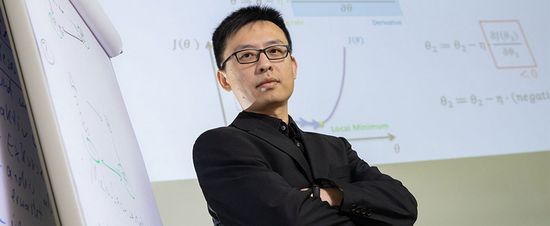
Haojin Yang is a senior researcher and multimedia and machine learning (MML) research group leader at Hasso-Plattner-Institute (HPI). Since 2019, he has been habilitated for a professorship. His research focuses on efficient deep learning, model acceleration and compression, and Edge AI.
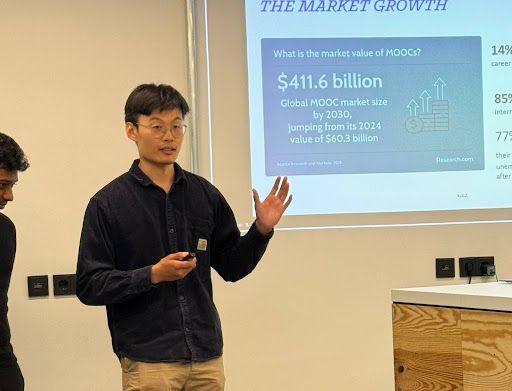
Weixing Wang is currently a PhD student at Hasso-Plattner-Insitut (HPI). His research topic focuses on Multi-Modal Foundation Models and hallucination mitigation algorithms.
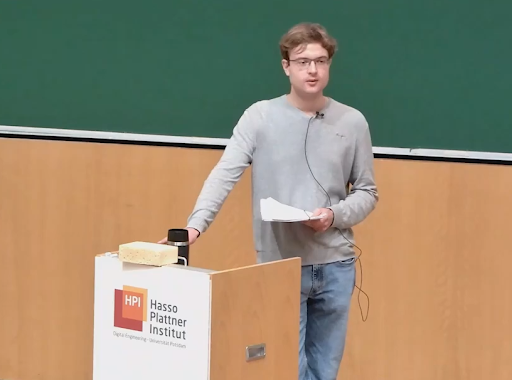
Jona Otholt is a PhD student at the multimedia and machine learning (MML) group at HPI. His research focus is open-world computer vision, where models encounter novel categories of data that are not contained in their training labels.

Zi Yang is a research assistant at Hasso-Plattner-Institute (HPI) and a PhD student at the Technical University of Berlin. His research focuses on efficient deep learning, dataset pruning, and sample selection.

Gregor Nickel studied at RWTH Aachen University and is currently pursuing his PhD in the Multimedia Machine Learning Group at the Hasso Plattner Institute. His research focuses on artificial intelligence and efficient deep learning, with a particular emphasis on applying AI models to weather forecasting.
Dr. Zhitong Xiong is a senior research scientist at the Department of Data Science in Earth Observation, Technical University of Munich. His current research centers on building and optimizing foundation models for Earth observation, with an emphasis on scalable, sensor-adaptive architectures and cross-modal learning. He serves as the lead of the ML4Earth working group, where I coordinate collaborative research efforts on applying machine learning to environmental and geospatial challenges. In parallel, he is contributing to the project Energy-efficient AI for Extreme Weather Events Forecasting, which aims to fight climate change through sustainable AI approaches that enhance early warning systems for natural disasters. His broader goal is to bridge fundamental AI research with impactful Earth science applications, particularly in the context of climate resilience and disaster risk reduction.

Constantin Le Cleï is a PhD student at the AI for Earth Observation lab at the Technical University of Munich. His research is centered on the use of machine learning for weather and fluid dynamics-related problems. He especially focuses on probabilistic models and how to make them more efficient.
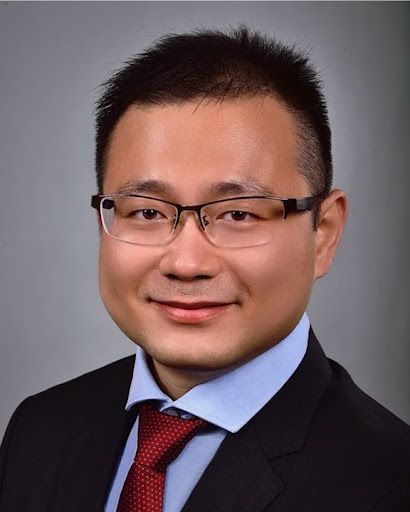
Dr. Peng Yuan is a postdoctoral researcher at the Section of Space Geodetic Techniques, GFZ German Research Centre for Geosciences. His research focuses on Global Navigation Satellite Systems (GNSS) meteorology, AI applications for extreme weather, and GNSS time series analysis related to climate change. He is a member of the Joint Study Group “Artificial Intelligence for Geodesy – AI4G” on “AI for GNSS Remote Sensing” within the International Association of Geodesy (IAG).
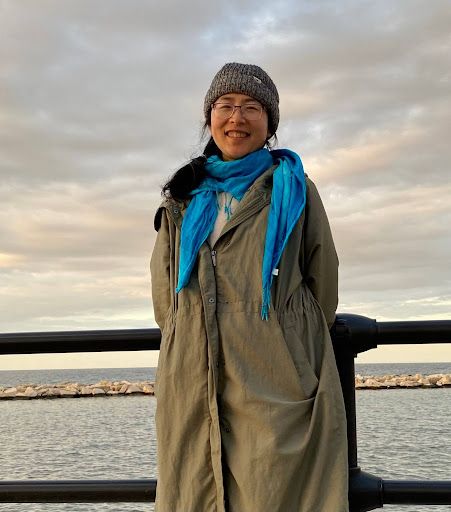
Dr. Liangjing Zhang is a researcher at GFZ Helmholtz Centre for Geosciences. Her research currently focuses on AI weather forecasting and GNSS Meteorology.