
Basic and intermediate concepts of programming in Python and R: data structures, conditions, loops, data input/output, analysis and visualization.
This course is open to anyone, but taylored to the HPI master program Digital Health.
Language: English
Course information
Welcome to the course "fundamentals of programming for digital health" by Berry Boessenkool at the chair of Bert Arnrich, Digital Health Cluster, Hasso Plattner Institute in Potsdam.
The videos and autograded exercises in this course aim to make you a great coder following good programming practices.
The course is open to anyone. The tutorial sessions are primarily aimed at the Digital Health master students, but usually some seats are still available, so while the course is running, feel free to join :).
The course is set up to technically require no previous programming skills. However, if you have little coding experience, you'll have to spend more time on this course than expected by the credit points. The weekly time requirement is between 7 and 11 hours for most participants in past years.
You can prepare for R ahead of the semester with my short R course if wanted.
The lectures are presented in short online videos accompanied by interactive programming exercises through CodeOcean. They can be watched / solved at your own time and pace.
The tutorial sessions take place in person on Wednesdays (11:00-12:30) in G2.U.10 (Campus III, Digital Health Cluster, basement floor).
On Mondays (13:30-15:00), you can work on exercises together, with Berry present for questions (same room).
The course grade is a weighted average of the weekly exercises (15%), an individual coding project with a report (50%) and a short oral exam (35%). The grading criteria are good programming practices.
Course contents
I1: infrastructure:
course info, IDEs, interactive exercises, git, markdown (released Oct 13, exercises due Oct 29)P1: intro & functions:
Python intro, syntax, data types, character strings, writing functions (Oct 20 - 29)P2: objects:
Collections (overview), lists, sets, tuples, dictionaries (Oct 27 - Nov 05)P3: loops:
conditional code execution, loops, list comprehension (Nov 03 - 12)P4: programming:
managing errors, writing classes, unit tests (Nov 10 - 19)P5: data science:
numpy, pandas, missing values, applications (Nov 17 - 26)Python practice:
exercises covering all course python contentR1: intro:
welcome, showcase, Rstudio configuration, syntax, help, vectors (Nov 24 - Dec 03)R2: basics:
statistics, functions, conditions, packages (Dec 01 - 10)R3: data types:
logicals, charstrings, categories, overview (Dec 08 - 17)R4: objects:
data.frame, matrix, list, array (Dec 15 - Jan 07)Christmas break vacation:
two weeks :)R5: real data:
read, merge, missing values, sources (Jan 05 - 14)R6: plots:
scatterplots, line plots, barplots, low level commands (Jan 12 - 21)R7: figures:
composition, histograms, boxplots, exporting, outlook (Jan 19 - 28)R8: flow control:
debugging functions, loops (Jan 26 - Feb 04)R practice:
exercises covering all course R content
Enroll me for this course
This course is offered by
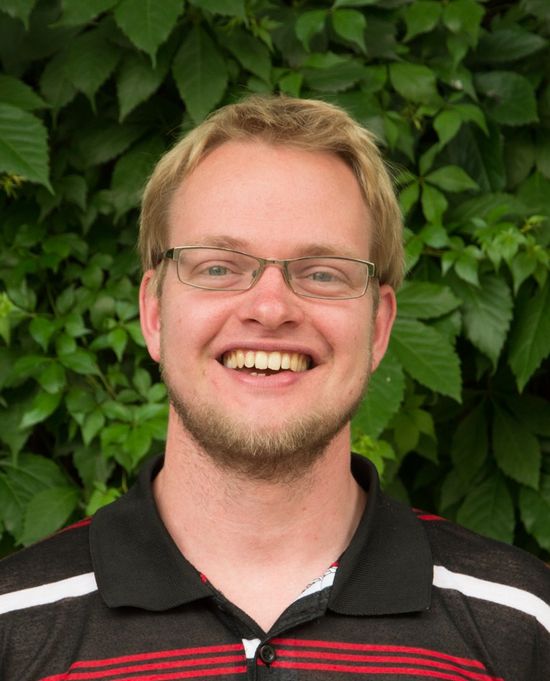
Berry Boessenkool has been teaching R courses in various formats since 2012. He is a freelance R trainer and consultant and works part-time as a lecturer at HPI. His passion for programming was sparked in his studies of geoecology and the analysis of environmental data is still close to his heart.
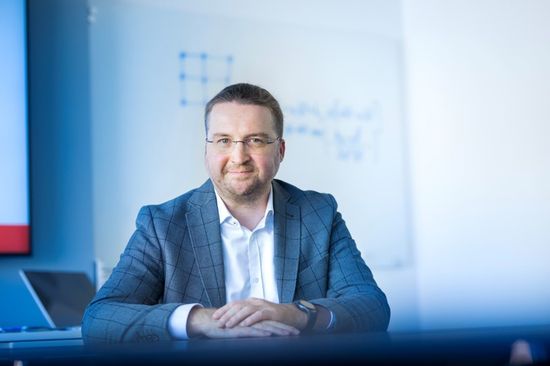
Prof. Dr.-Ing. Bert Arnrich is Professor for Digital Health – Connected Healthcare at the Digital Health Center of the Hasso Plattner Institute.
His research on ubiquitous sensing and computing technologies is directed towards paving the way for transforming healthcare systems from purely managing illness to maintaining wellness everywhere, anytime and for anyone. He has been a PI in several European and national projects. He has co-authored over 120 refereed research publications.
He studied "Informatics in the Natural Sciences" and received the PhD degree Dr.-Ing. for the thesis "Data Mart Based Research in Heart Surgery" from Bielefeld University in 2006. He established and headed the research group Pervasive Healthcare in the Wearable Computing Laboratory at ETH Zurich between 2006 and 2013. He received an EU FP7 Marie Curie Cofound Fellowship in 2013 and was appointed to tenure track professorship at the Computer Engineering Department at Bosporus University until 2017. Between 2017 and 2018 he worked as a Science Manager for Emerging Technologies at Accenture Technology Solutions.