
Compared to Cloud Computing, which is centralized in computing and data storage, Edge Computing brings computation and data storage closer to data sources.
Edge AI combines edge computing and AI technology and has become a rapidly developing field in the past few years. Edge AI enables AI computing directly on the edge or client device, enhancing power efficiency, supporting low latency, and solving data privacy problems.
Therefore, what improvements need to be made to traditional deep learning algorithms in Edge AI scenarios? This course teaches you about deep model compression and optimization techniques, decentralized and collaborative deep learning approaches and algorithms, software, and hardware for Edge AI.
Language: English
Deutsch, English
Big Data and AI, Cloud and Operating Systems, Intermediate
Course information
What will you learn?
- Summary of deep learning basics relevant for this course
- Deep model compression and optimization techniques
- Decentralized and collaborative deep learning
- Algorithms, software and hardware for Edge AI
Is this course for me?
Prerequisites
- High school math is required (pre-course)
- Basics in Machine Learning and Deep Learning
- Python as programming language
The German MOOC Praktische Einführung in Deep Learning für Computer Vision teaches relevant basics regarding Deep Learning and Computer Vision. Unfortunately we did not find a fitting English alternative.
Level
Advanced
Time required
6-8 hours per week
How do I get started?
Environment setup (or what you'll need for our practical examples)
- A Webbrowser (preferably on a laptop or desktop computer)
- A Kaggle account (we will do all coding exercises using Kaggle Notebooks)
Attention: This course is currently in self-study mode, in which you do not have access to graded assignments/exams. Therefore, we can only issue you a certificate of participation.
Course contents
Week 1 - Basics and History of Neural Networks:
In this week, we provide you with a concise history of neural networks to learn about how the field of deep learning evolved and what challenges have been overcome. Furthermore, we provide you with some basic knowledge about the learning process of deep neural networks. We will also have a practical session, where you are going to implement a few basic neural network layers from scratch!Week 2 - CNN Architectures:
Over time it has been found that specific architectures for neural networks achieve the best results. In this week, we provide you with an extensive overview of neural architectures for image classification and how they evolved over time. In the practical session, we will use PyTorch to train a neural network for image classification on the CIFAR-100 dataset.Week 3 - Compact Network Design and Knowledge Distillation:
In this week, you will learn all about the design of compact neural networks and knowledge distillation. Both methods are of high importance when applying deep neural networks on edge devices because they reduce the memory, computation, and energy requirements of neural networks! In the practical session, we will implement and experiment with knowledge distillation on the CIFAR-100 dataset.Week 4 - Advanced Deep Compression Methods:
In this week, we will investigate further model compression techniques, such as pruning, dynamic networks, and network quantization. The practical session of this week is all about the training of a binary neural network on the CIFAR-100 dataset.Week 5 - Edge AI Introduction and Federated Learning:
In this week, we will perform a deep dive into federated learning. A technique that allows to decentralize the training of a neural network. Such a decentralized training has many advantages, e.g., we do not need to copy the data between hosts and can train directly on an edge device! This weeks practical session is as much an experiment for you as it is for us! Together with all other course participants you will train a model for image classification on the ImageNet dataset in a decentralized manner!Week 6 - Edge AI Concepts:
In this week, we will have a look at further advanced concepts behind Edge AI, we will also investigate specific Edge AI hardware and application scenarios. In the practical session, you will experiment with a collaborative inference task, where edge devices and cloud devices work together.Week 7 - Final Exam:
Final ExamI like, I wish:
After the course is finished, we would like to gather your feedback in an optional survey.
Enroll me for this course
Learners
Certificate Requirements
- Gain a Certificate by earning at least 50% of the maximum number of points from all graded assignments.
- Gain a Confirmation of Participation by completing at least 50% of the course material.
Find out more on our page for certificates and guidelines.
This course is offered by
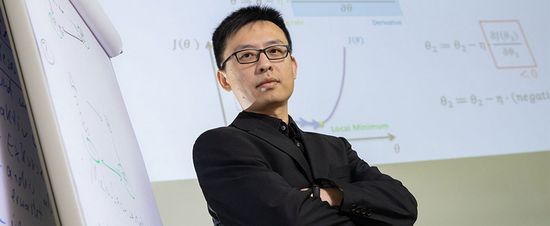
Haojin Yang is a senior researcher and multimedia and machine learning (MML) research group leader at Hasso-Plattner-Institute (HPI). Since 2019, he has been habilitated for a professorship. His research focuses on efficient deep learning, model acceleration and compression, and Edge AI.
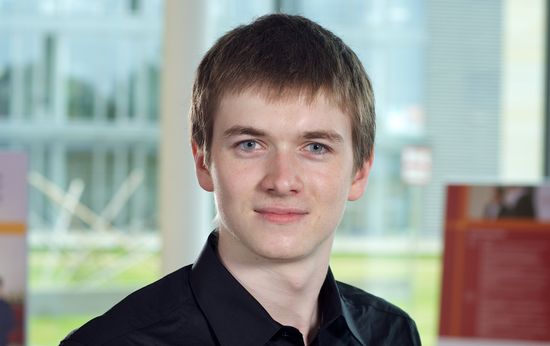
Joseph Bethge is a PhD student studying deep learning techniques in the area of Computer Vision with a focus on Binary Neural Networks (BNNs) and is one of the main authors of the Open-Source framework BMXNet 2 for BNNs.